
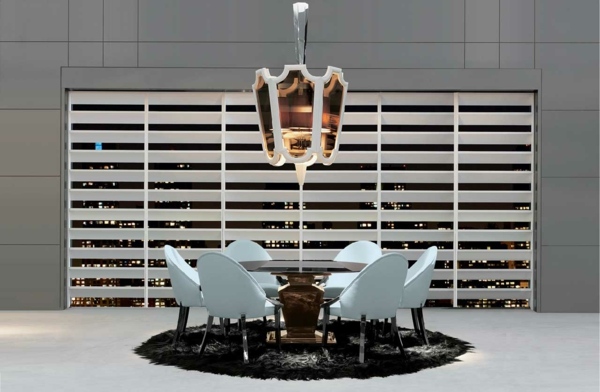
The Enduring Craft Behind Italian Handmade Furniture
Why Italian Artisanship Commands Global Respect
Italian handmade furniture occupies a singular position in interior design, distinguished by techniques refined across centuries and regional traditions that remain fiercely protected. When you select these pieces, you invest in objects shaped by hands that trained for years under master artisans, not factory assembly lines. The value extends beyond aesthetics into structural integrity, material provenance, and repairability that mass production cannot replicate.
The sector divides broadly between three productive hubs: Brianza for contemporary and classic furniture, Tuscany for leather upholstery and traditional woodwork, and Veneto for refined cabinet-making. Each region maintains specialized supply chains—Brianza alone hosts over 2,000 registered artisan enterprises within a 50-kilometer radius, many family-operated across three or more generations.
Distinguishing Authentic Handmade Construction
Verification requires examining specific construction markers. Solid wood joinery in authentic Italian handmade furniture employs mortise-and-tenon or dovetail joints, never metal brackets or cam-lock fasteners visible upon drawer removal. Drawer bottoms slide into grooves cut directly into side panels, not nailed or stapled. Table aprons—horizontal support pieces connecting tops to legs—measure 5-8 centimeters in thickness for structural stability.
Upholstery work demands equal scrutiny. Traditional Italian methods use eight-way hand-tied spring suspension, with each coil individually tied to neighboring springs and the frame using waxed twine. This technique, requiring 8-12 hours per sofa, creates responsive seating that retains shape for decades. Foam density in seat cushions typically ranges 35-50 kg/m³ for base layers, with softer 25-30 kg/m³ foam or down wrapping for comfort layers.
| Feature | Handmade Standard | Mass-Market Equivalent |
|---|---|---|
| Frame joints | Mortise-and-tenon, glued and pegged | Dowels or corner blocks with screws |
| Spring system | Eight-way hand-tied | Sinuous wire or webbing |
| Wood seasoning | Air-dried 2-5 years, kiln-finished | Rapid kiln-drying only |
| Veneer application | Hand-laid, book-matched | Prefabricated plywood panels |
Material Selection and Regional Specialties
Italian artisans maintain direct relationships with specific timber suppliers. Walnut from Sorrento, chestnut from Cansiglio forest, and oak from Slavonian regions enter workshops with documented chain-of-custody. For marquetry and inlay work, workshops in Cremona and Sorrento still use techniques documented since the Renaissance—sawing veneer sheets to 0.6-1.2 millimeter thickness, then cutting decorative patterns with fretsaws before assembly.
Leather upholstery sourced from Tuscan tanneries—particularly around Santa Croce sull’Arno—undergoes vegetable tanning using chestnut and quebracho extracts over 30-40 days. This process yields leather that develops individual patina rather than synthetic coatings that crack. Full-grain leathers display natural markings; corrected-grain indicates sanding and embossing that obscures quality variations.
Finishing Techniques That Define Quality
Surface finishing represents 30-40 percent of production time in high-quality workshops. Traditional shellac applications receive 12-20 hand-rubbed coats, each sanded with progressively finer abrasives between applications. Modern workshops may substitute catalyzed lacquers for durability, but top-tier operations still offer French polishing—a technique using cotton pads charged with shellac and alcohol, rubbed in figure-eight motions until achieving mirror depth.
Gilding work, still practiced in Venetian and Florentine workshops, applies genuine gold leaf (23-24 karat, 0.1 micron thickness) over gesso and bole clay layers. A single chair may require 300-500 individual leaf applications, each handled with static-charged brushes.
Integrating Handmade Pieces Into Contemporary Interiors
Successful integration requires balancing visual weight and functional context. A single statement piece—a credenza with pietra dura inlay, a bergère in hand-stitched leather—anchors a room more effectively than matched sets that read as period reproduction. Consider these practical applications:
- Dining spaces: A single solid walnut table with hand-planed surface contrasts effectively with industrially produced seating
- Bedrooms: Upholstered headboards with hand-tufted detailing add textural warmth to minimalist frameworks
- Entryways: Console tables with visible joinery demonstrate craft values immediately upon arrival
Scale proportion matters critically. Italian handmade furniture often follows classical dimensional ratios—dining tables commonly measure 75 centimeters height with 45-centimeter apron clearance, suited to standard seating but requiring verification against contemporary chairs you may already own.
Investment Considerations and Long-Term Value
Pricing structures reflect actual labor input. A hand-tied sofa requires 40-60 hours of specialized labor; at Italian artisan wages, this component alone exceeds €2,000-3,000 before materials. Pieces priced below this threshold for comparable construction likely employ abbreviated techniques or originate from licensed manufacturing rather than authentic workshops.
Documentation you should receive includes:
- Certificate of authenticity with artisan or workshop identification
- Material specifications with species and origin
- Finish type and maintenance protocols
- Repair service accessibility—reputable workshops guarantee component replacement decades after purchase
Insurance valuation requires professional appraisal, as replacement costs significantly exceed original purchase prices for discontinued artisan lines. Several major insurers now maintain specialized schedules for Italian handmade furniture given documented appreciation trajectories for established workshops.
Preservation and Maintenance Protocols
Wooden surfaces benefit from annual application of beeswax polish rather than silicone-based sprays that accumulate residue. For upholstered pieces, rotating cushions monthly prevents compression settlement in hand-tied spring systems. Direct sunlight exposure exceeding three hours daily requires UV-protective window films—traditional finishes lack modern UV stabilizers and will shift color unpredictably.
Humidity control between 45-55 percent prevents wood movement that stresses joinery. If seasonal gaps appear at panel edges, this indicates proper construction allowing wood expansion; forced climate control to eliminate these gaps actually damages structural integrity over time.
The decision to incorporate Italian handmade furniture into your projects represents commitment to permanence in an era of disposable consumption. These pieces carry forward techniques that would otherwise vanish, while delivering functional objects that improve with age rather than deteriorating—an increasingly rare proposition in contemporary material culture.